What it is
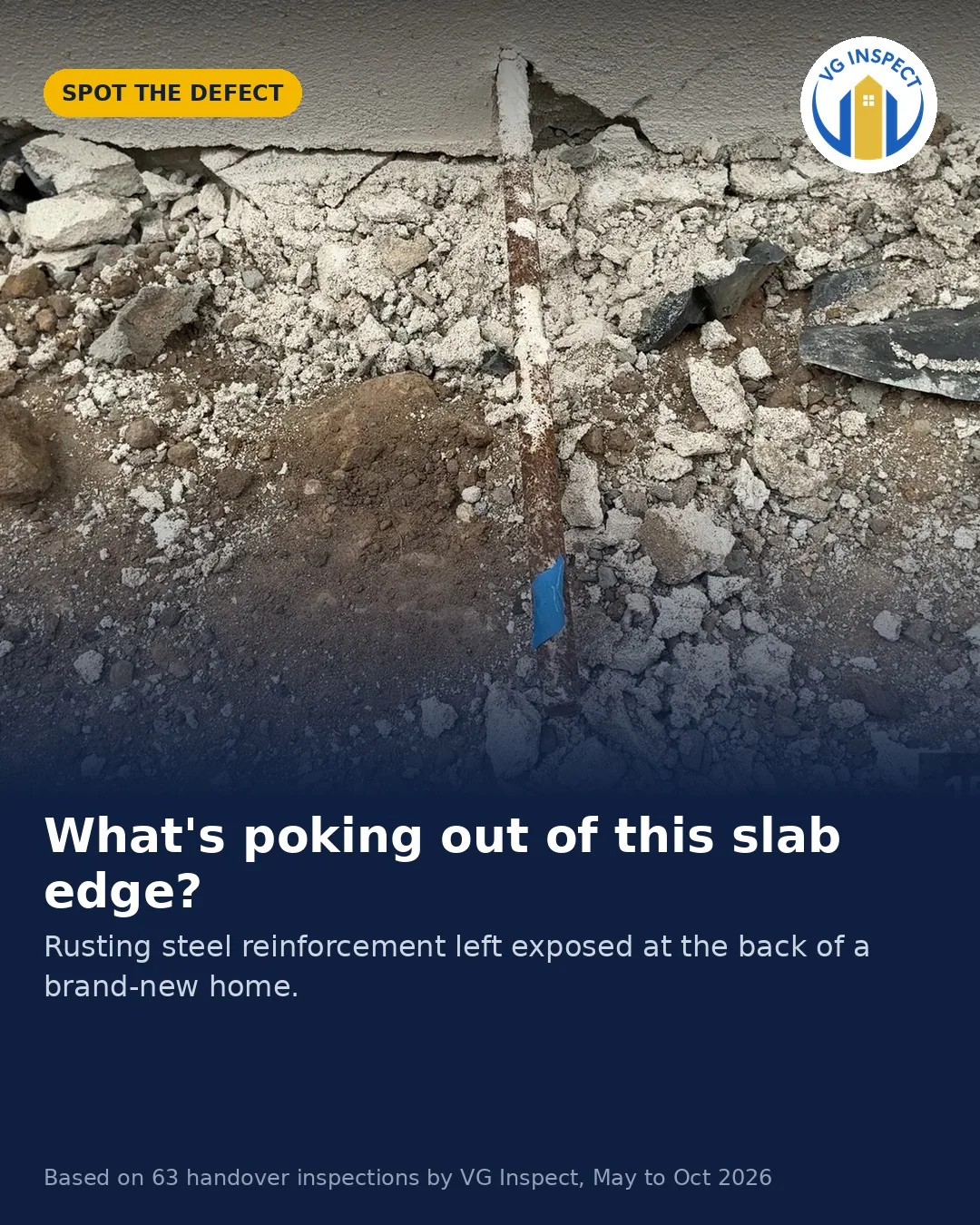
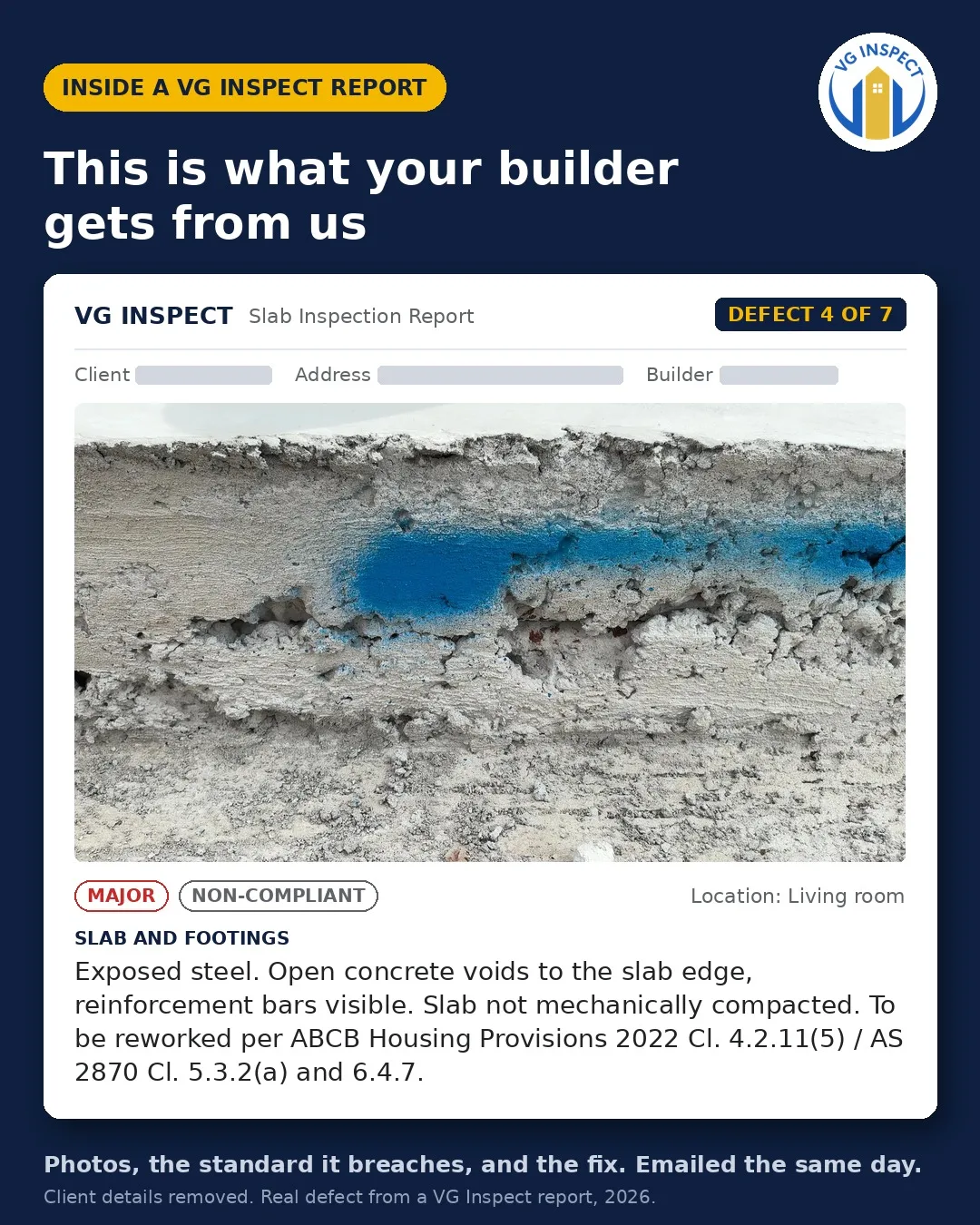
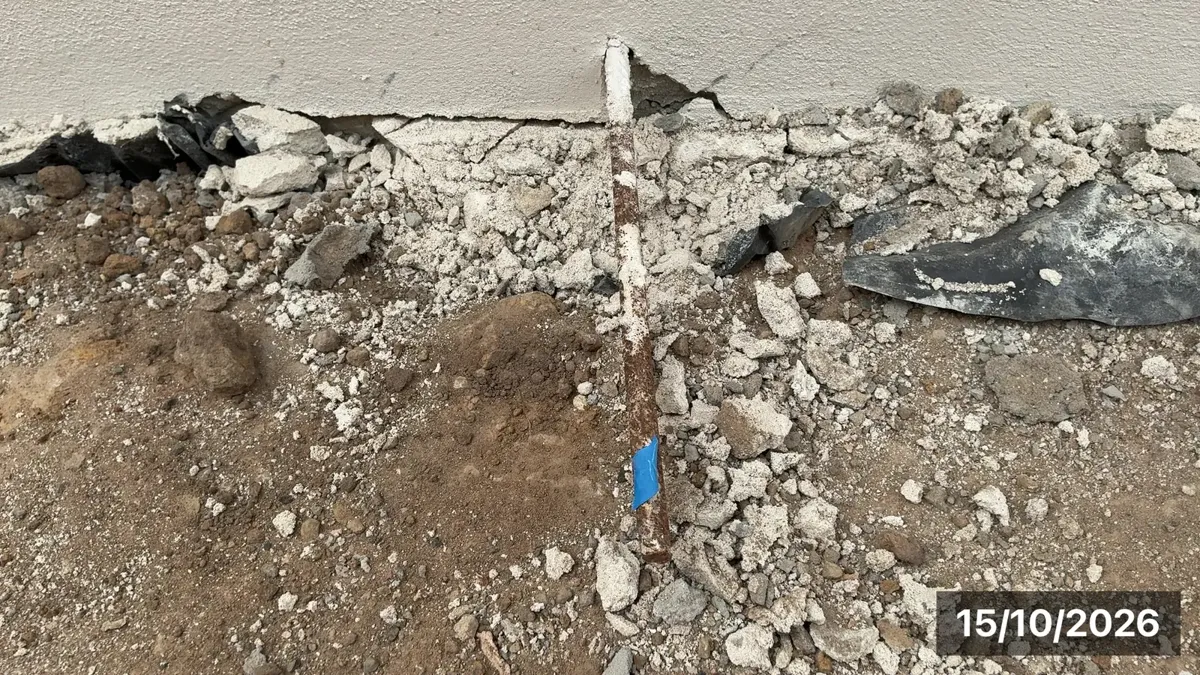
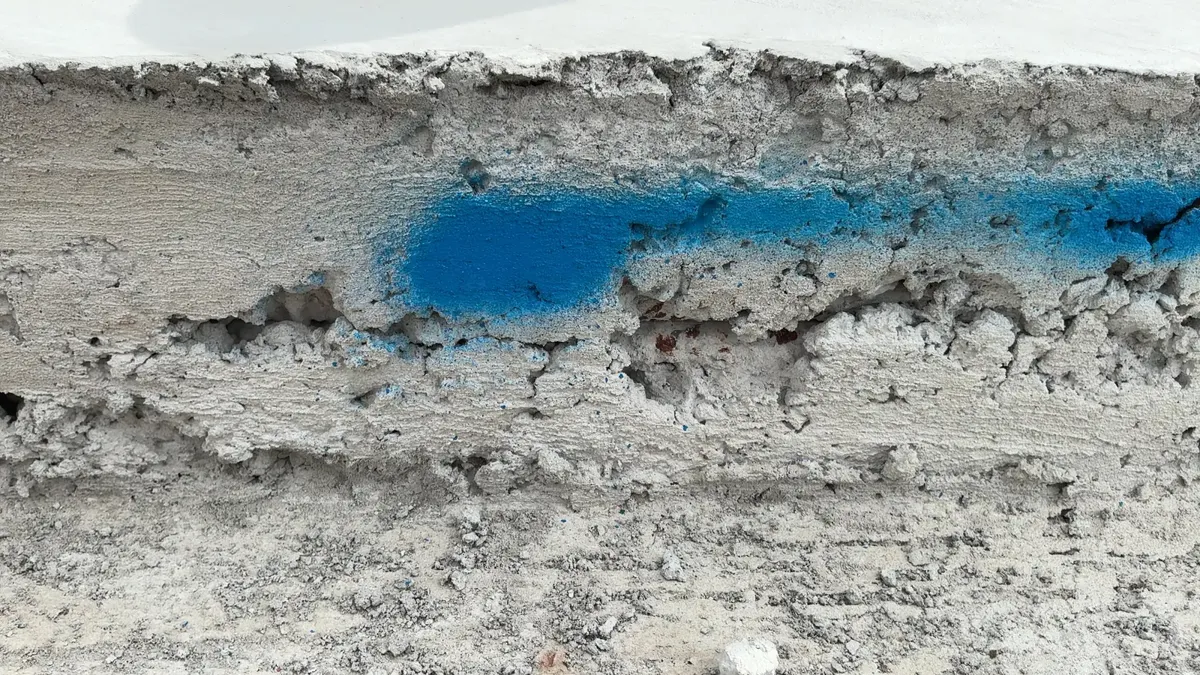
Steel reinforcement showing at the slab edge, with open voids (honeycombing) in the concrete.
Why it matters
Steel needs concrete cover to stop it rusting. Once it rusts it swells and cracks the concrete around it, which is known as concrete cancer.
How we check it
At slab stage we check the edge for voids, honeycombing and exposed bars, and that the concrete has been properly compacted.
The fix
Rework the slab edge to restore full cover to the steel, as set out in the report.
How common it is
Concrete slab or driveway damage, holes or poor finish turned up in 19% of homes at handover.
What this means for your home
Reinforcement showing at the slab edge means the steel does not have its required concrete cover, and cover is what stops the bar rusting. AS 3600 sets the minimum cover precisely because exposed or shallow steel draws moisture, corrodes and expands, and that expansion spalls the concrete off the edge of your slab over years. Caught at the slab or handover stage it can be patched and the cause addressed; left on a coastal or reactive site it becomes structural concrete cancer that is expensive and disruptive to repair. We check the full slab perimeter for bars poking through, honeycombing and thin cover at the edge beam, and record anything exposed so it is made good before the brickwork and landscaping bury the evidence. The report carries a photo of the exposed bar and the clause for required cover, so the builder treats it as the structural item it is rather than a cosmetic one. Concrete problems only get harder and more expensive with time, which is exactly why the slab and handover stages are the right moments to catch thin cover — before the brickwork, paths and gardens put it out of sight and out of reach.
The standard
ABCB Housing Provisions 2022, 4.2.11(5); AS 2870
As seen on our socials