What it is
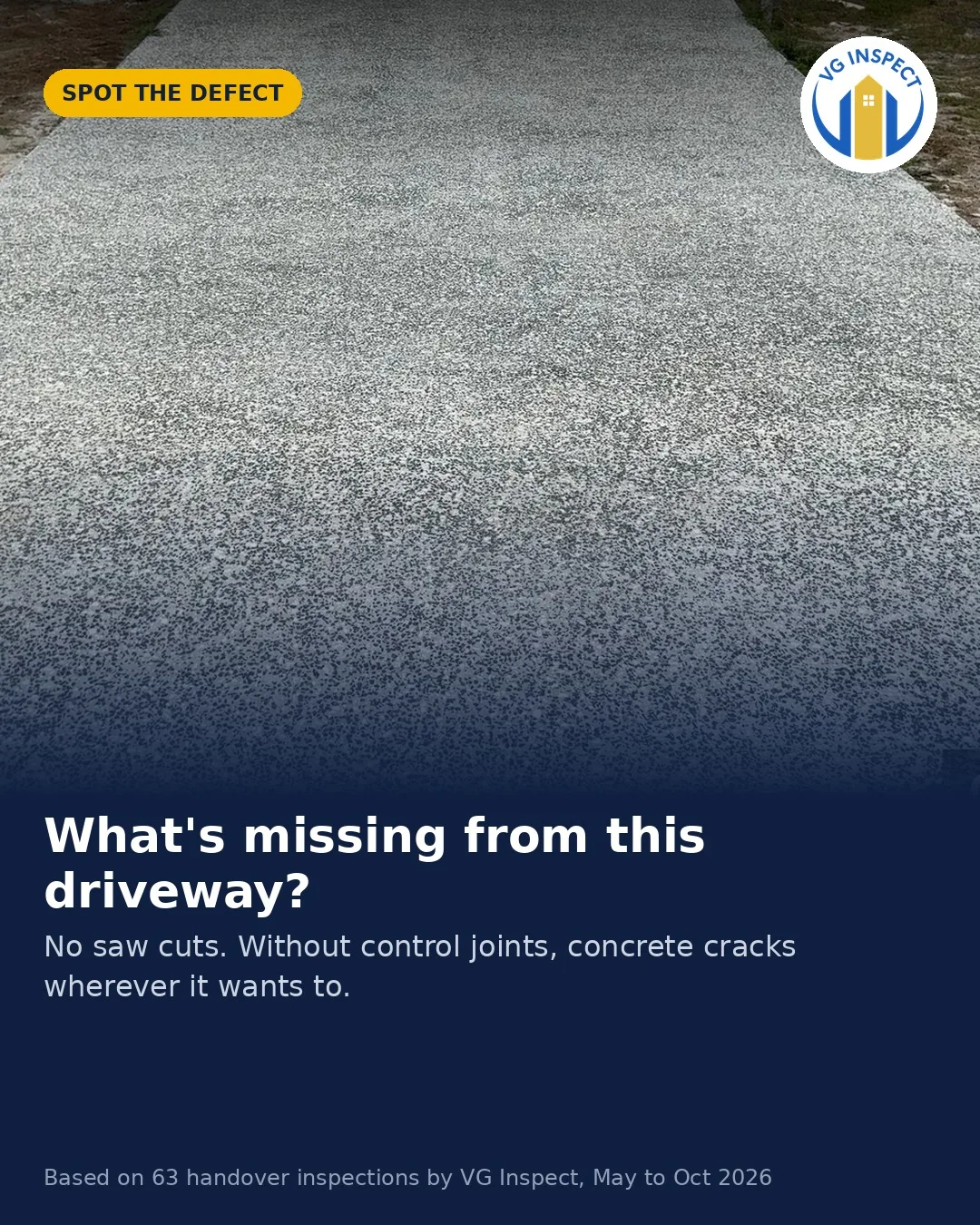
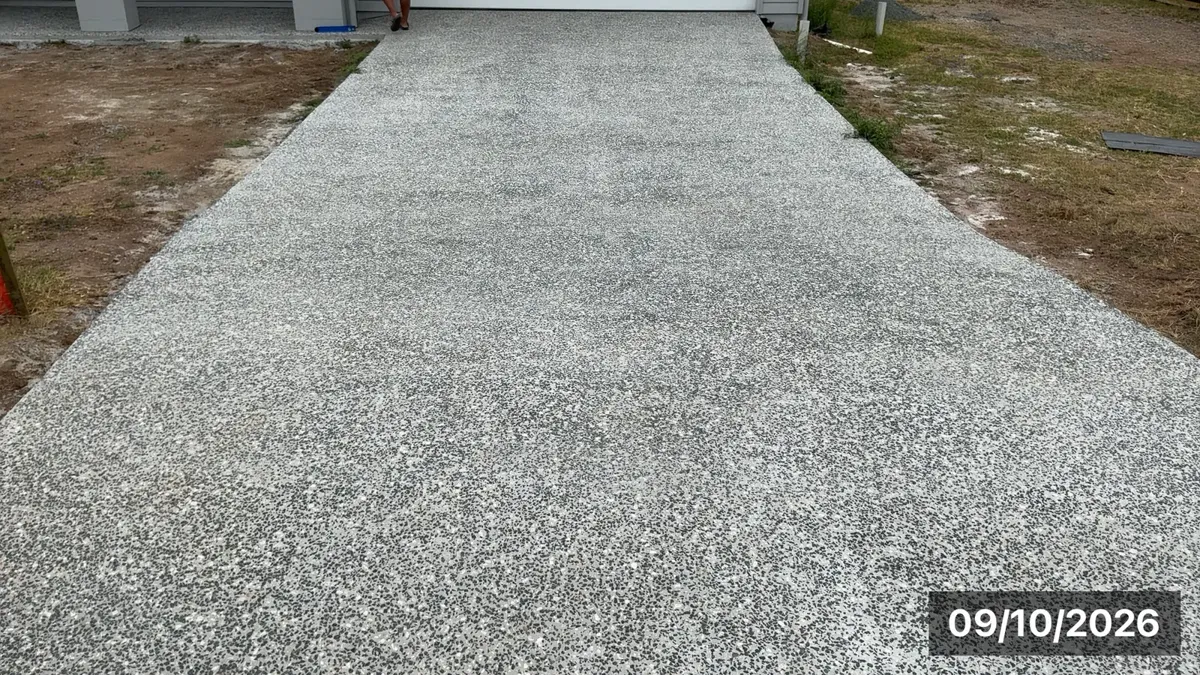
A long concrete driveway with no control joints cut into it.
Why it matters
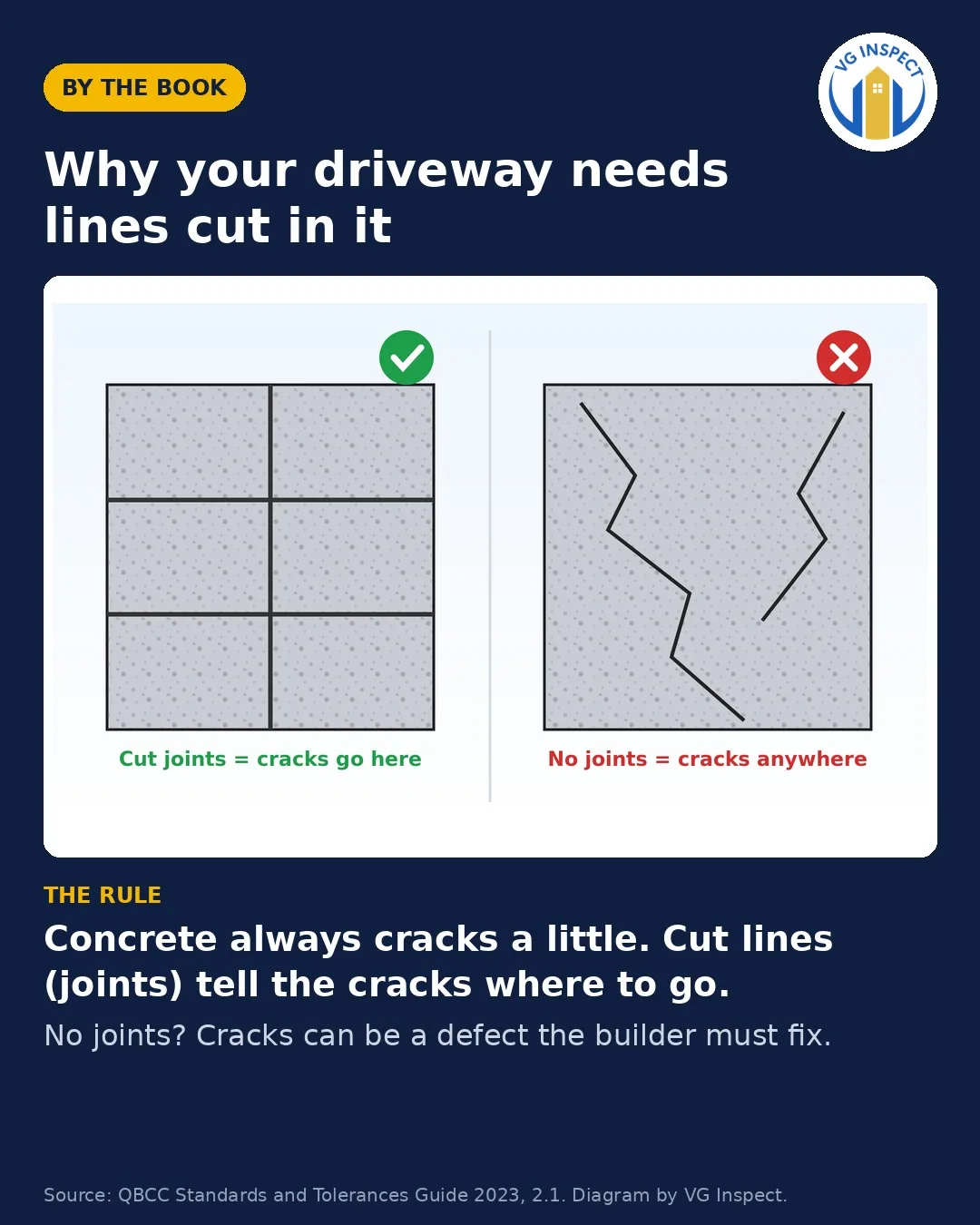
Without joints, shrinkage cracks run wherever they want across the driveway.
How we check it
We check driveways and paths for control joints and cracking.
The fix
Cut control joints early, before random cracking sets in.
How common it is
Driveway saw cuts were missing in 14% of homes at handover.
What this means for your home
A concrete driveway poured without control joints at the right spacing will crack where the slab decides, not where you want it. Industry practice and AS 3600 call for tooled or sawn joints so shrinkage and ground movement release along a planned line. Caught early the joints can be cut; once the slab has cracked randomly, the driveway is a cosmetic defect you live with or a replacement you pay for. Reactive clay soils through South East Queensland make this worse, not better. We measure the joint spacing against the driveway's dimensions, check the depth and layout, and flag a driveway with missing or too-widely-spaced joints so the builder addresses it while it is still a jointing conversation rather than a cracked-slab one. The report notes the joint spacing against the driveway's size so the builder cuts the joints before the slab cracks on its own terms. On the reactive clay common across South East Queensland, a jointless driveway is a crack waiting to happen. Catching it while it is still a saw-cut conversation, rather than a cracked-and-replace one, is a straightforward save an independent eye picks up. We check the same joints on paths, patios and the garage apron, not just the main driveway, because the same shortcut tends to be repeated across every flatwork pour on the site and cracks the same way.
The standard
QBCC Standards and Tolerances Guide 2023, 2.1
As seen on our socials