What it is
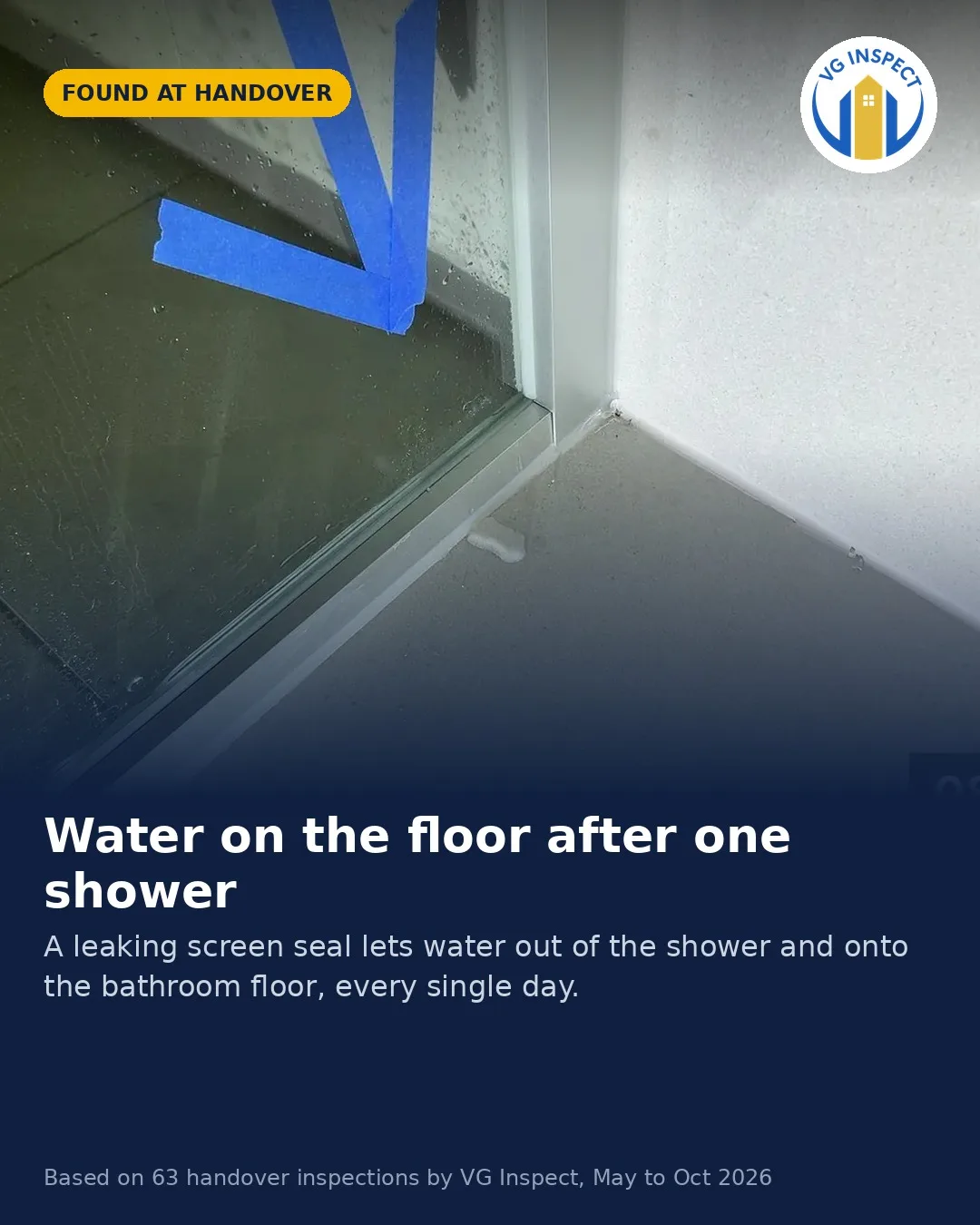
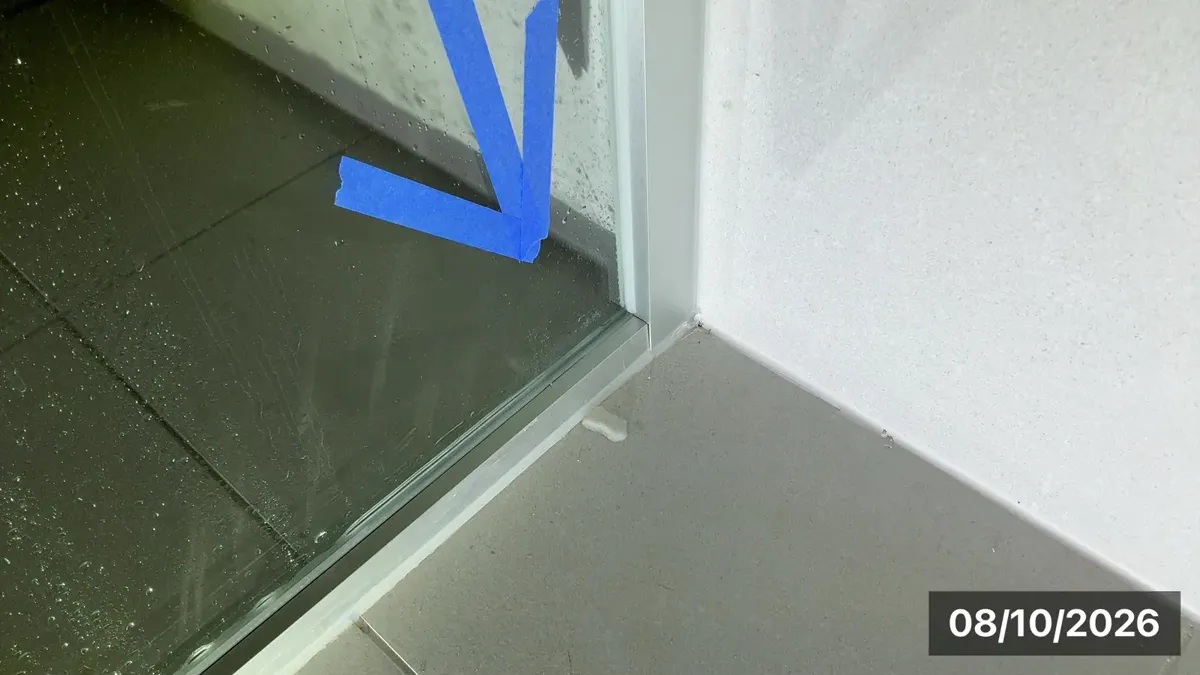
Water gets past the seal at the base or side of the shower screen and onto the bathroom floor.
Why it matters
Every shower wets the floor outside the waterproofed shower area. Over time that water finds grout joints, door frames and the floor next door.
How we check it
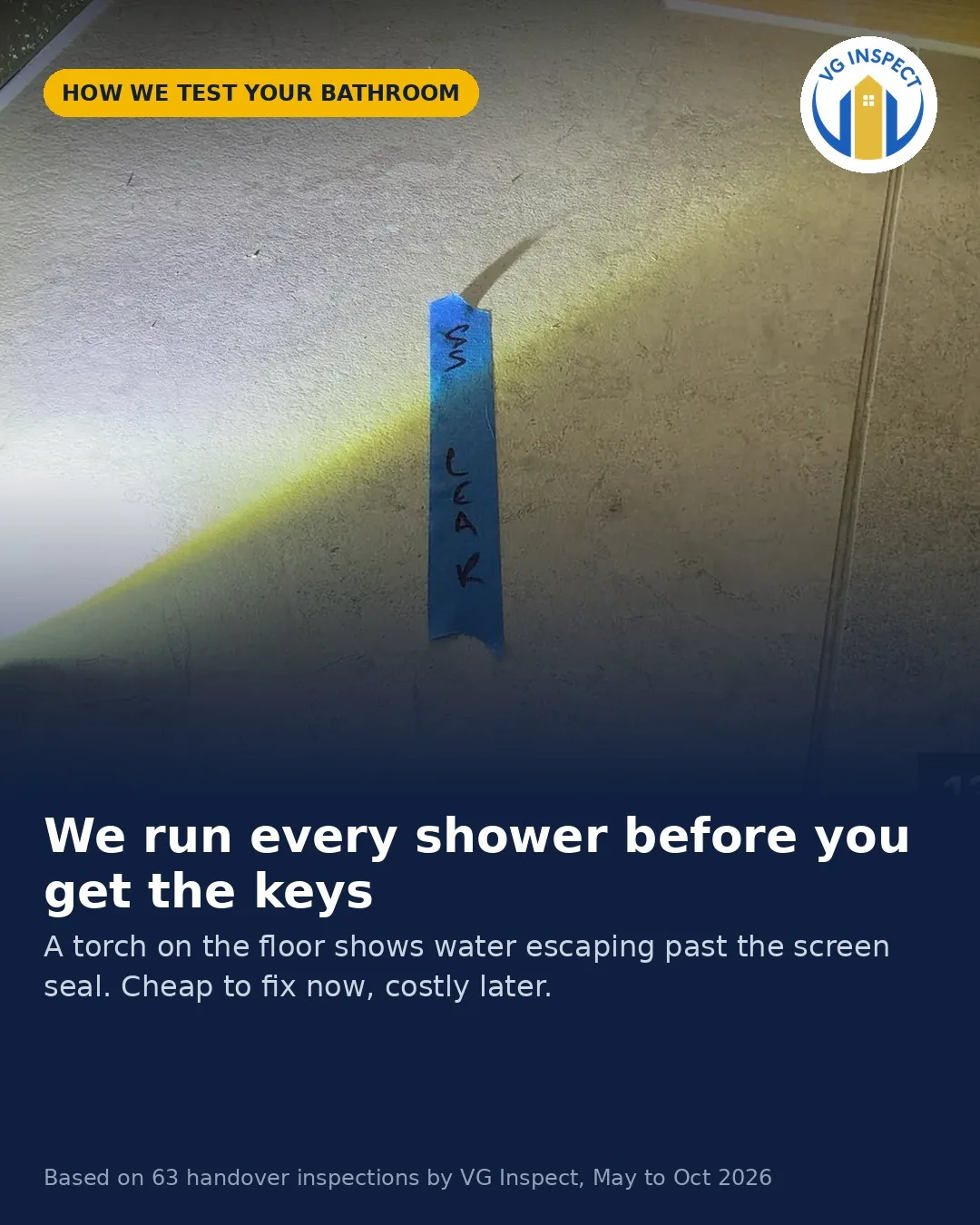
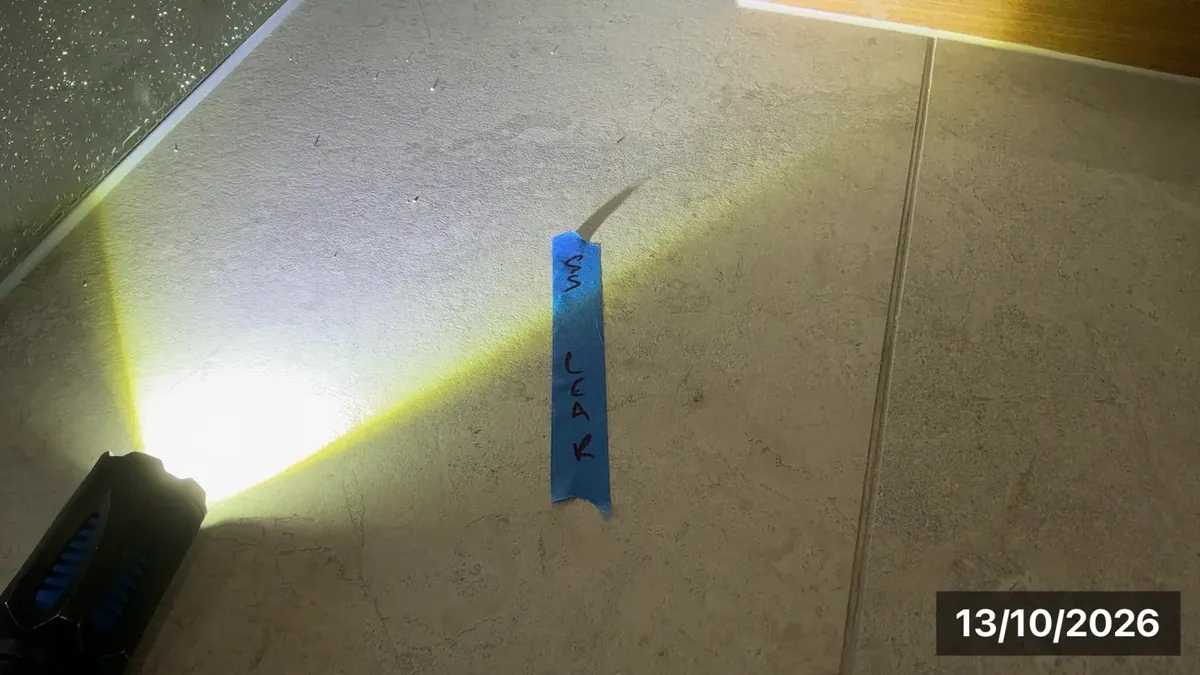
We run every shower, then shine a torch low across the floor outside the screen. Even a thin film of water shows up.
The fix
Usually a new seal, a re-set screen or fresh silicone. It's a quick fix while the builder is still on site.
How common it is
Shower screens were leaking in 13% of the new homes we inspected at handover.
What this means for your home
Caught at handover, a leaking shower screen is one of the cheapest fixes on the whole report — a new seal or a bead of silicone while the plumber and glazier are still coming back for other trades. Left alone, the water tracks under the screen track and into the floor substrate just outside the waterproofed zone, which AS 3740 does not require to be tanked. Six months on, you are looking at swollen skirtings, lifting floor tiles in the hallway and, in a second-storey bathroom, a stain on the ceiling below. Because the leak is slow, most owners do not notice until the damage is done. That is exactly why we run every shower and torch the floor on the day you still have leverage over the builder. On the report this item reads as a photograph of the water film, the location, and the clause it fails, so your builder cannot wave it away as normal. A second inspection after the fix confirms the seal holds before you sign the defects-liability paperwork. It is the kind of small item that proves why an independent set of eyes at handover pays for itself many times over.
The standard
AS 3740-2021 (waterproofing of domestic wet areas)
As seen on our socials