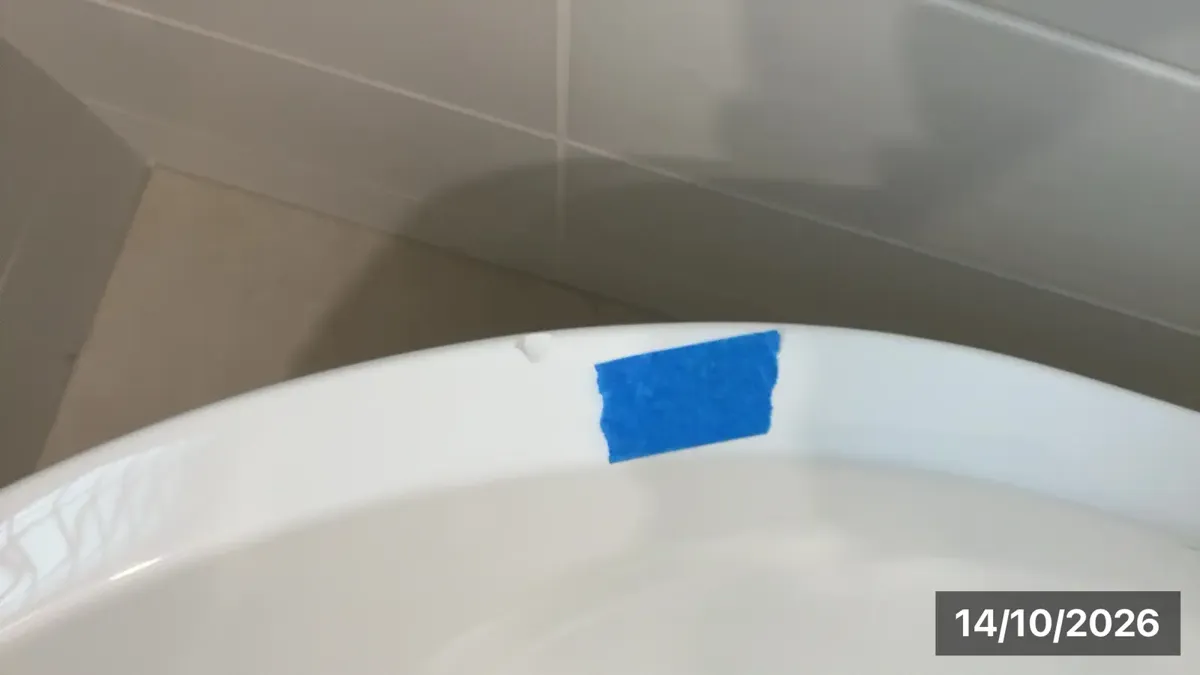
What it is
A chip in the bath rim.
Why it matters
Easy to miss at the walk-through. Once you've moved in, it's hard to prove you didn't do it.
How we check it
We inspect baths, basins and fixtures closely for chips and scratches.
The fix
Professional repair or replacement before handover.
How common it is
76% of homes had at least one bathroom, wet-area or tiling defect at handover.
What this means for your home
A chipped or scratched bath is a finish defect under the QBCC Standards and Tolerances Guide, and the only honest time to catch it is before you have used the bathroom — otherwise the builder can reasonably say the damage is yours. At handover a chip is the builder's to repair or replace while the plumber is still on the job and the bath can be accessed. Live with it and you own both the chip and the argument. Baths get knocked by trades carrying materials through, and a protective film often hides the damage until it is peeled. We lift the protection, run a light across the surface and check the rim, base and any visible edge, photographing every chip, scratch and crack so it is on the record while it is still clearly a construction-stage defect. We lift the protective film and photograph every mark so the damage is clearly documented as a construction-stage defect, not something you caused. Timing is everything here: once you have used the bathroom, the conversation changes. Catching surface damage to baths, basins and benchtops before you move in is one of the simplest, clearest wins an independent handover inspection delivers. We treat baths, basins, benchtops, glass and the kitchen sink as one sweep, because surface damage to any of them is easiest to pin on the builder before you have used the room, and hardest to argue afterwards.
As seen on our socials