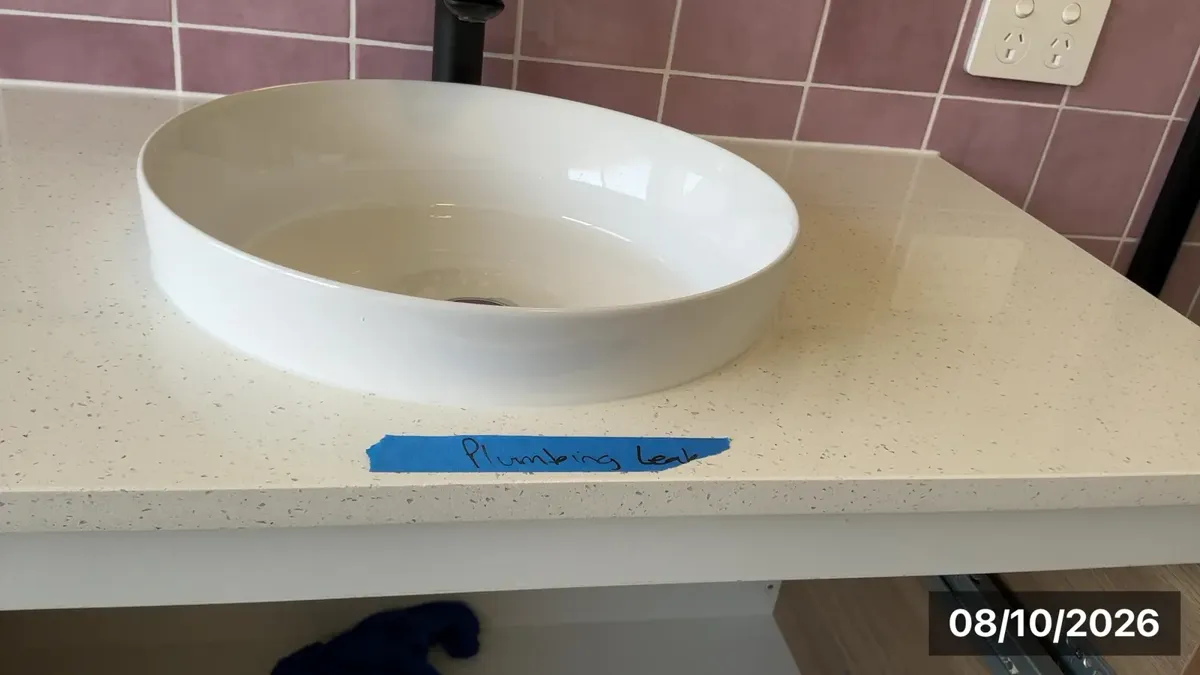
What it is
Basin traps, toilet connections, shower screens and water inlets dripping before anyone has lived in the home.
Why it matters
A slow drip under a vanity swells the cabinet and stains the floor for months before anyone notices.
How we check it
We run every tap and shower and look under every sink and vanity with a torch.
The fix
Tighten or replace the fitting, then dry out and check the cabinetry for damage.
How common it is
16% of the homes we inspected at handover (10 of 63) already had an active leak.
What this means for your home
A plumbing leak found before you move in is a builder problem; the same leak found after settlement becomes your insurance claim. At handover the lines are pressurised but the house is empty, so a weeping joint, a dripping isolation tap or a slow connection under the kitchen shows up as a damp patch or a ticking water meter rather than as damage you have to live around. The NCC and AS/NZS 3500 require every connection to be sound and tested, and the builder has to rectify a defect identified at the practical completion inspection. We check under every wet point, read the meter with all taps off, and note anything that moves — so it is fixed before the cabinetry and your belongings make it hard to reach. Every leak we find goes on the report with the location and a photo of the wet evidence, which turns a vague 'it might be dripping' into a specific item the builder has to action. We can return for a re-check once the plumber has been back, so you are not taking anyone's word that a leak you never saw has actually been stopped.
As seen on our socials