What it is
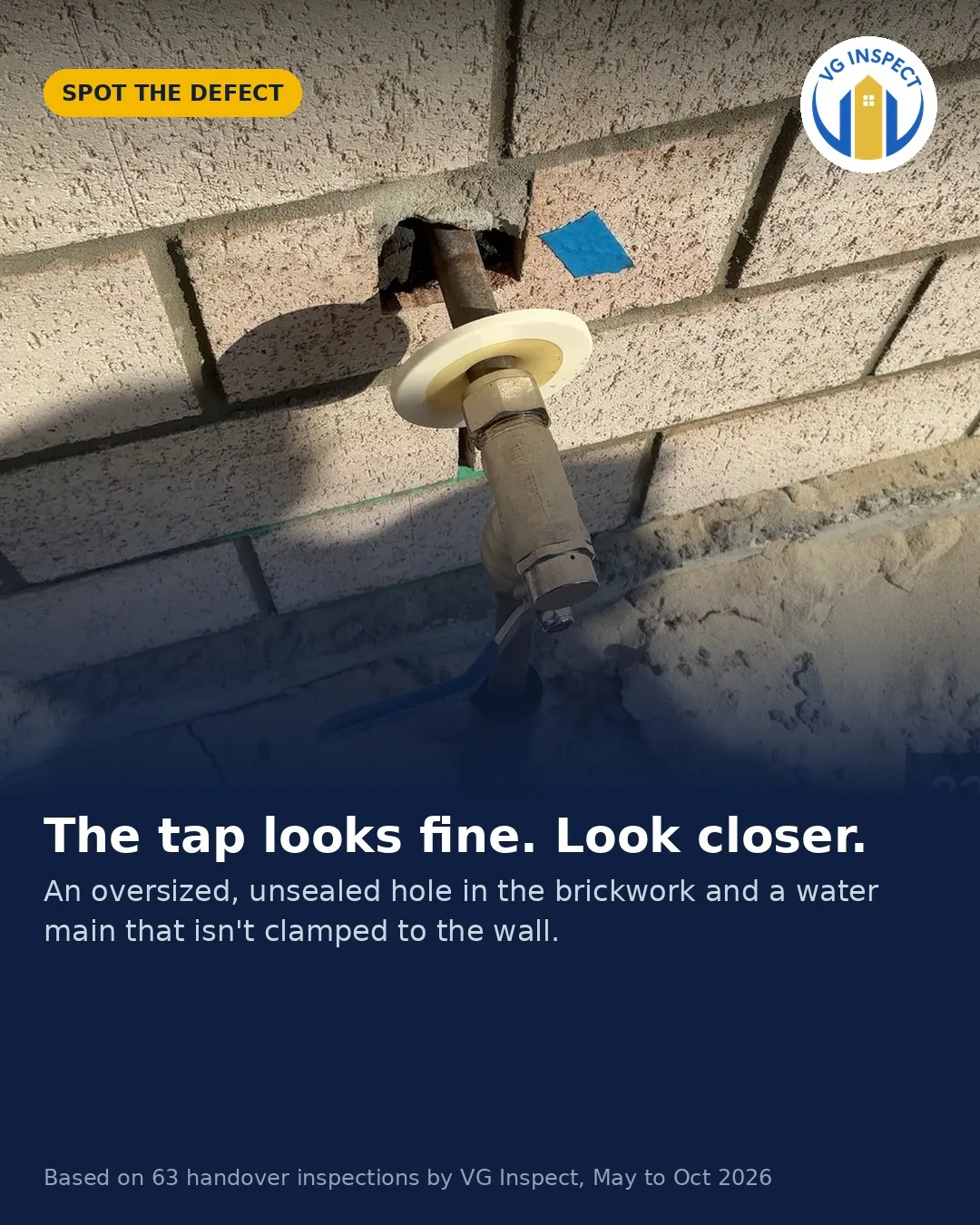
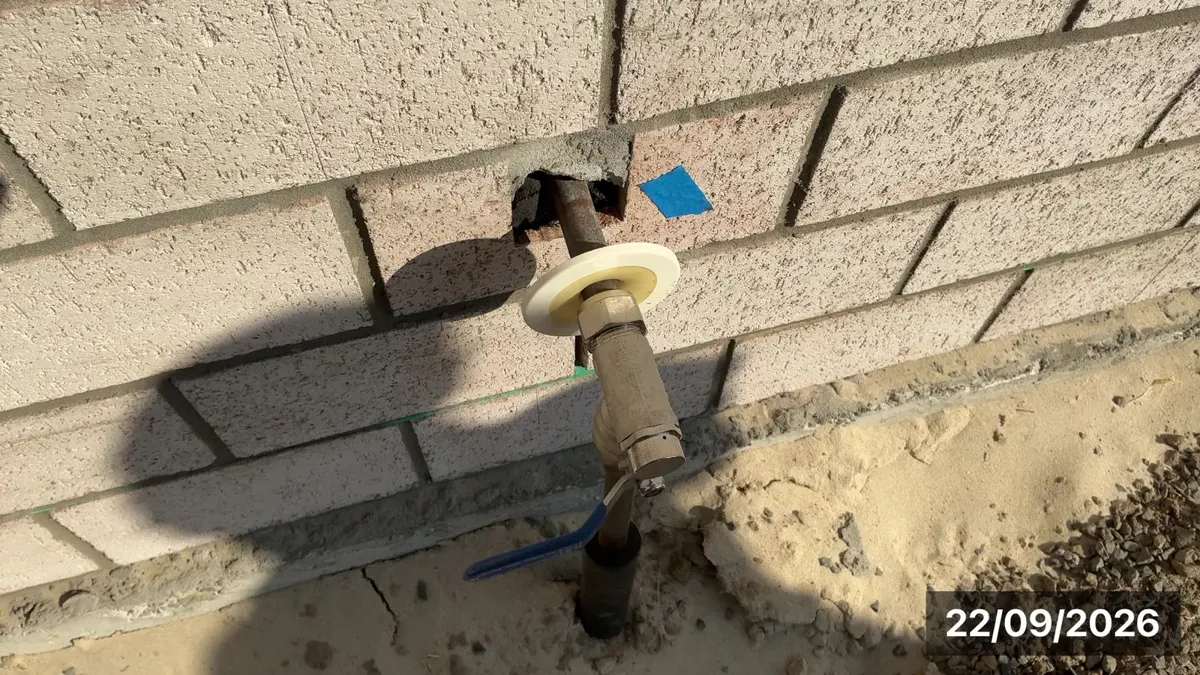
The water main comes through an oversized, open hole in the brickwork and isn't clamped to the wall.
Why it matters
An open hole lets in water, pests and vermin. An unclamped pipe takes stress at the joint every time the water hammers.
How we check it
We look at every pipe, cable and duct where it goes through an external wall.
The fix
Clamp the pipe and seal the penetration with a suitable sealant or collar.
How common it is
Service penetrations (air-con, NBN, conduits, water pipes) were left unsealed in 19% of homes at handover.
What this means for your home
Where the water main passes through the slab or an external wall, that penetration has to be sealed — both to keep water out of the building fabric and, where the slab is the termite system, to close an entry path AS 3660.1 relies on. At handover an unsealed penetration is a five-minute fix with the right collar or sealant while the builder is still on site. Leave it and you have given stormwater a route under the slab and termites a concealed highway behind the wall lining, which is the worst kind of defect because you cannot see it working. We check every service penetration on the perimeter, inside and out, and photograph any that are open, poorly packed or bridged by mortar so they are closed before the ground is landscaped over them. On the report the open penetration is photographed inside and out with the clause noted, so the builder closes it rather than debating whether it matters. In termite country an unsealed service entry is one of the handful of items we treat as non-negotiable, because the cost of getting it wrong — concealed entry into the frame — dwarfs the five-minute fix it takes to get it right.
As seen on our socials