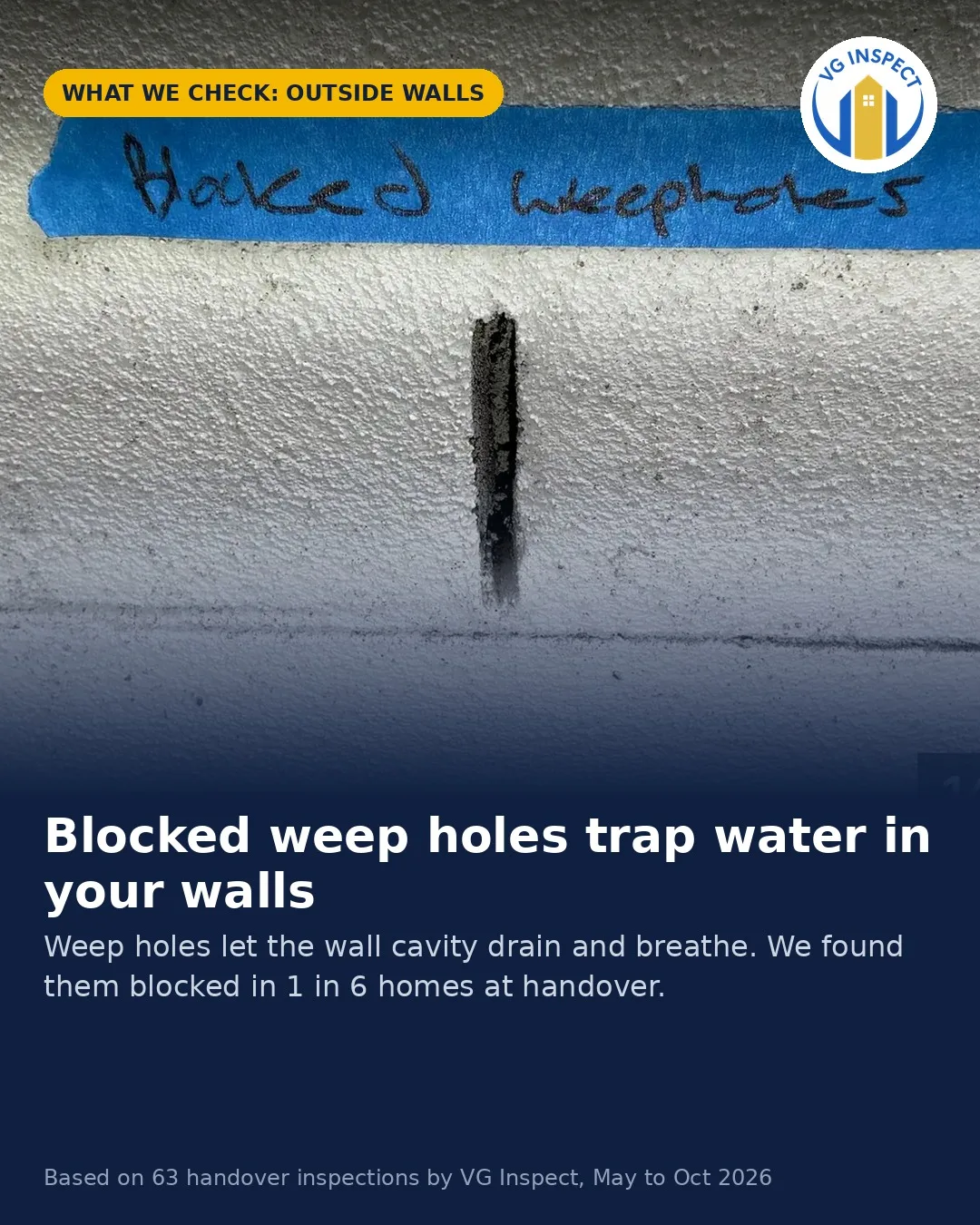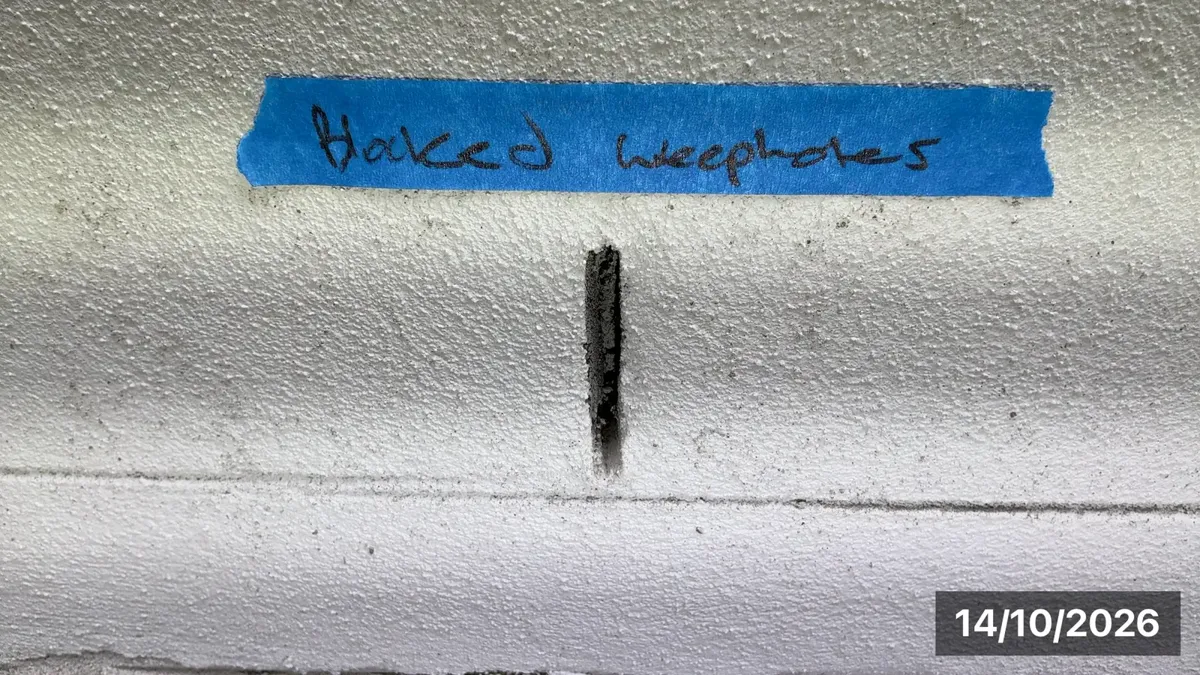
What it is
The small vertical slots at the bottom of a brick or rendered wall are filled with mortar or render.
Why it matters
Weep holes let the wall cavity drain and breathe. Blocked ones trap water in the wall.
How we check it
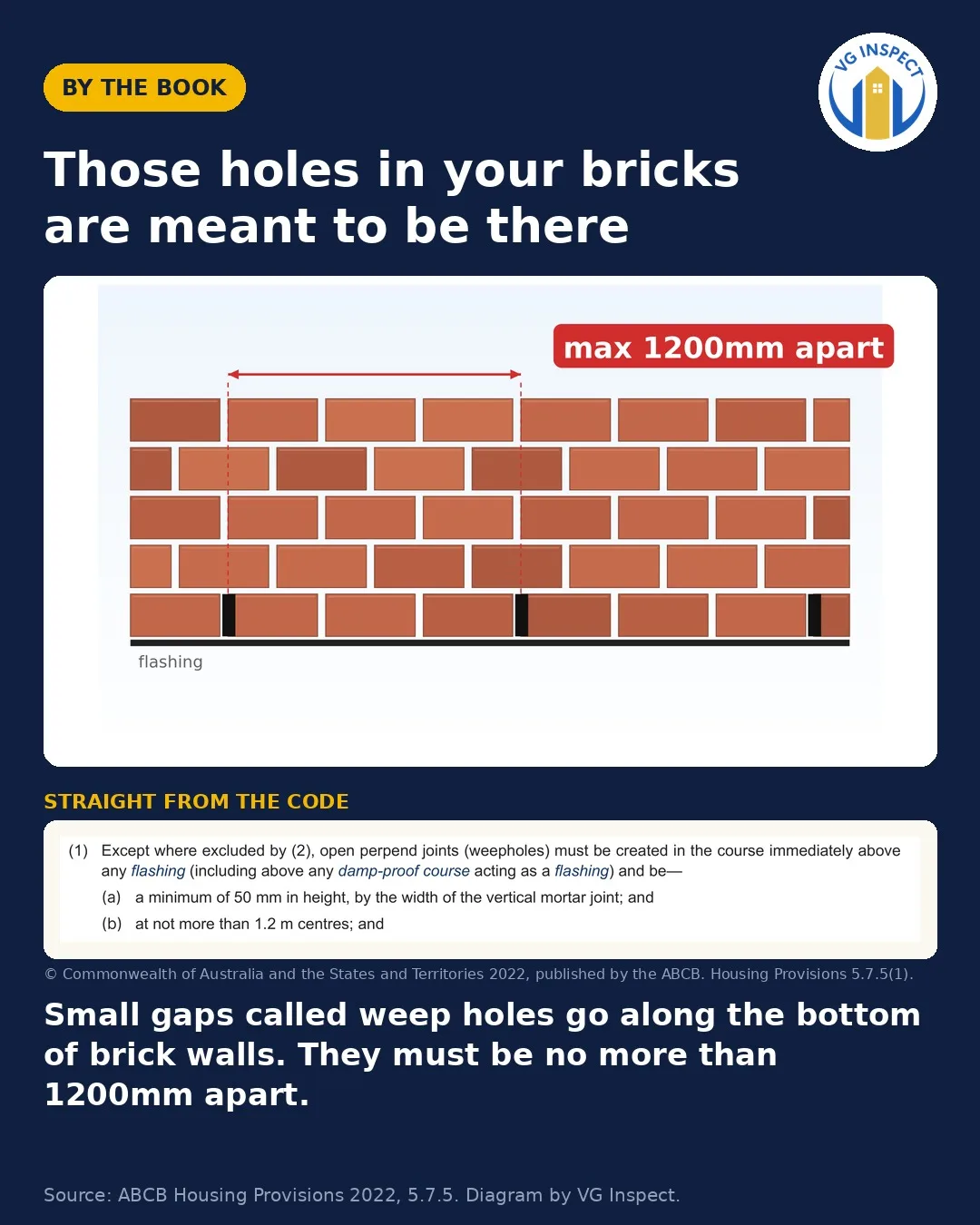
We check weep holes are present, at the right spacing and clear.
The fix
Clear the weep holes without damaging the flashing behind them.
How common it is
Weep holes were blocked or missing in 16% of homes at handover.
What this means for your home
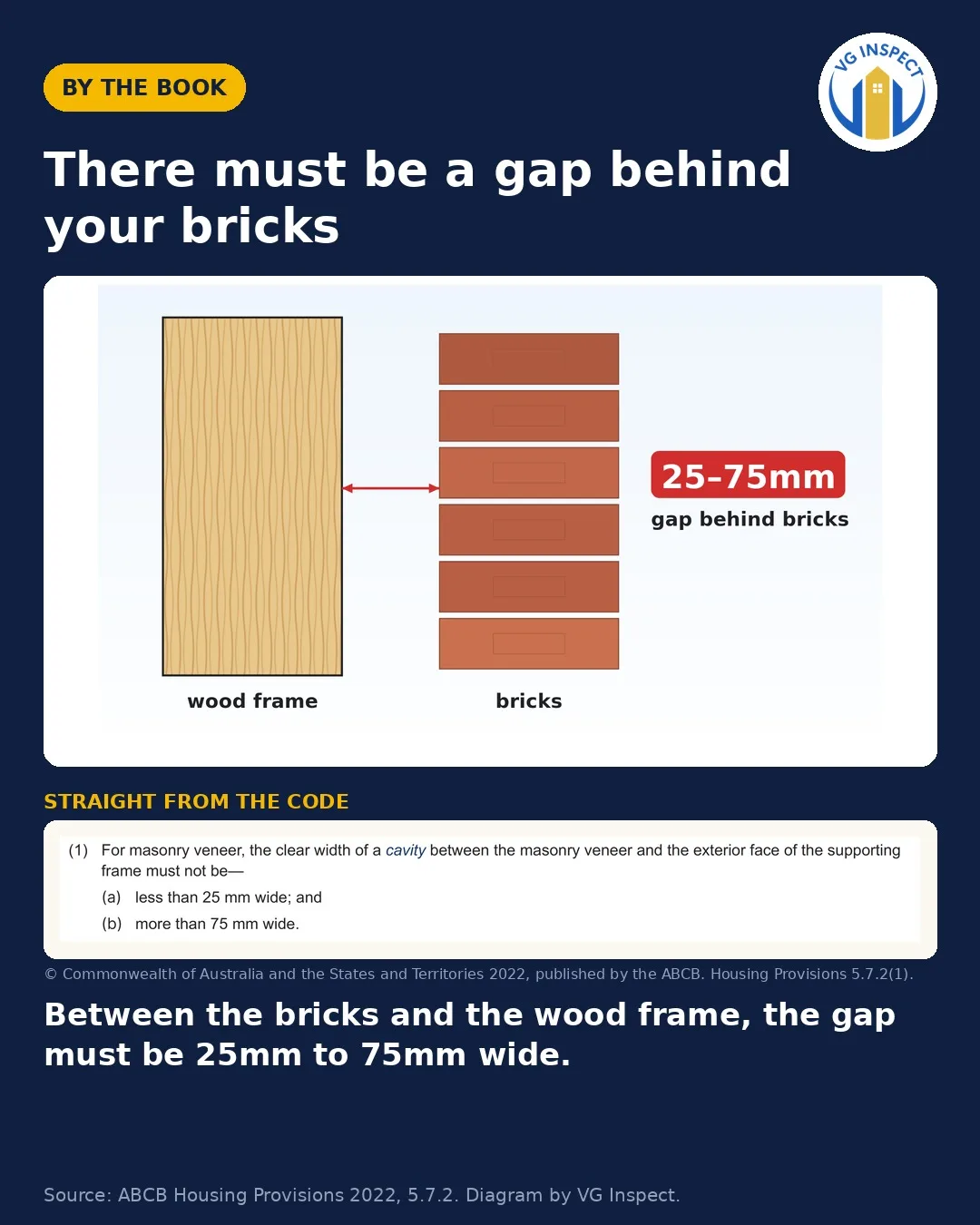
Weep holes are the drainage and ventilation for the brick cavity, and when they are blocked by mortar droppings, render or landscaping, water that gets into the cavity has nowhere to go. The NCC requires weep holes at the required spacing precisely so the cavity can drain and breathe. Caught at handover, clearing them is a trivial fix; left blocked, moisture builds in the cavity, finds the frame and the wall ties, and shows up as damp patches and efflorescence on the inside wall a year or two on. Because they sit low and are easy to overlook, they are often mortared shut during the build. We check the weep holes along every brick wall, especially at the base and above windows, and flag any that are blocked or missing so the cavity can do its job. We photograph the blocked holes along the wall so the builder clears them rather than disputing it. It is an easy defect to create during bricklaying and an easy one to overlook, which is why it is on our standard check for every brick-veneer home. A cavity that cannot drain is a slow damp problem, and catching it at handover is far simpler than diagnosing efflorescence on an interior wall a year later.
The standard
ABCB Housing Provisions 2022, 5.7.5
As seen on our socials