What it is
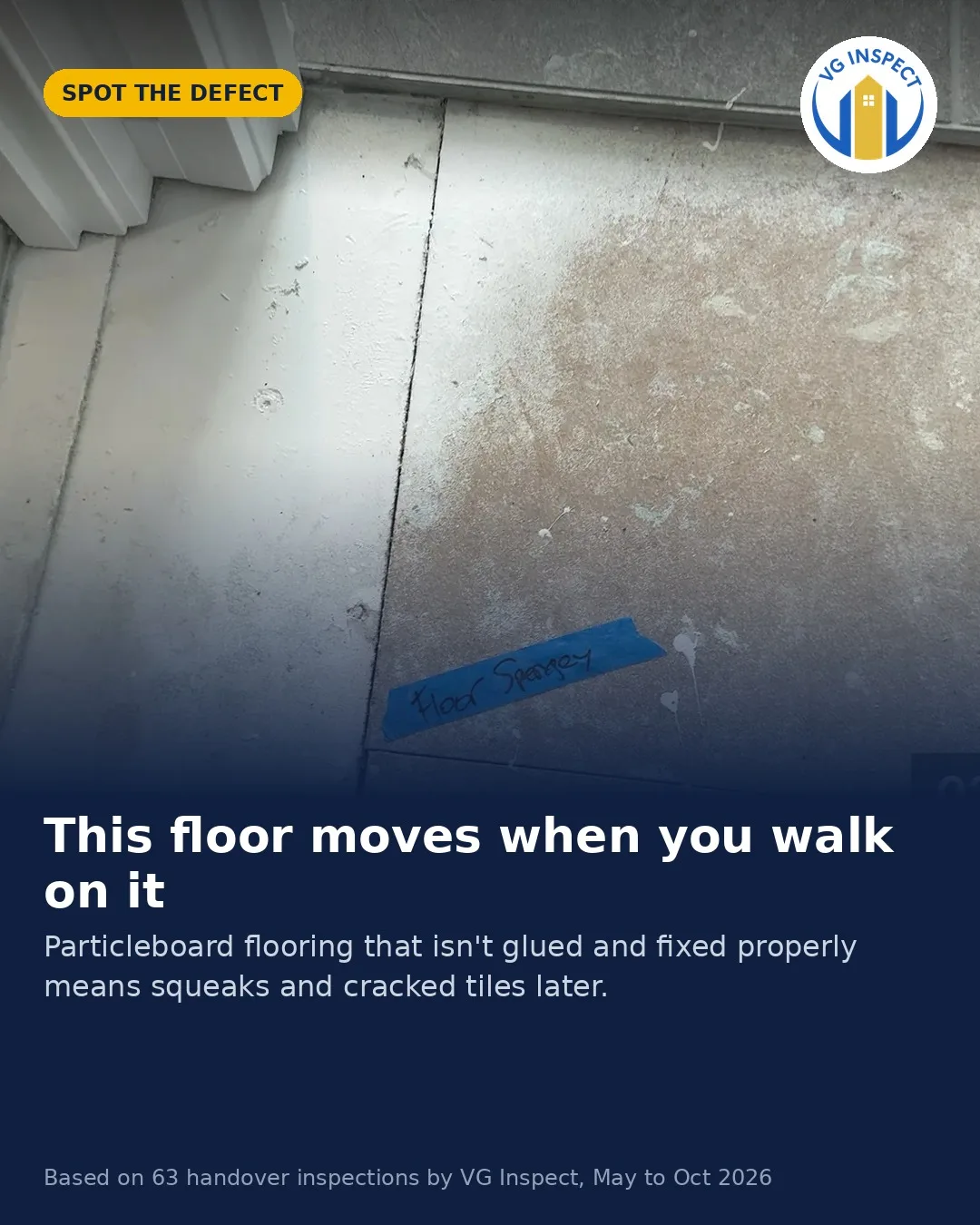
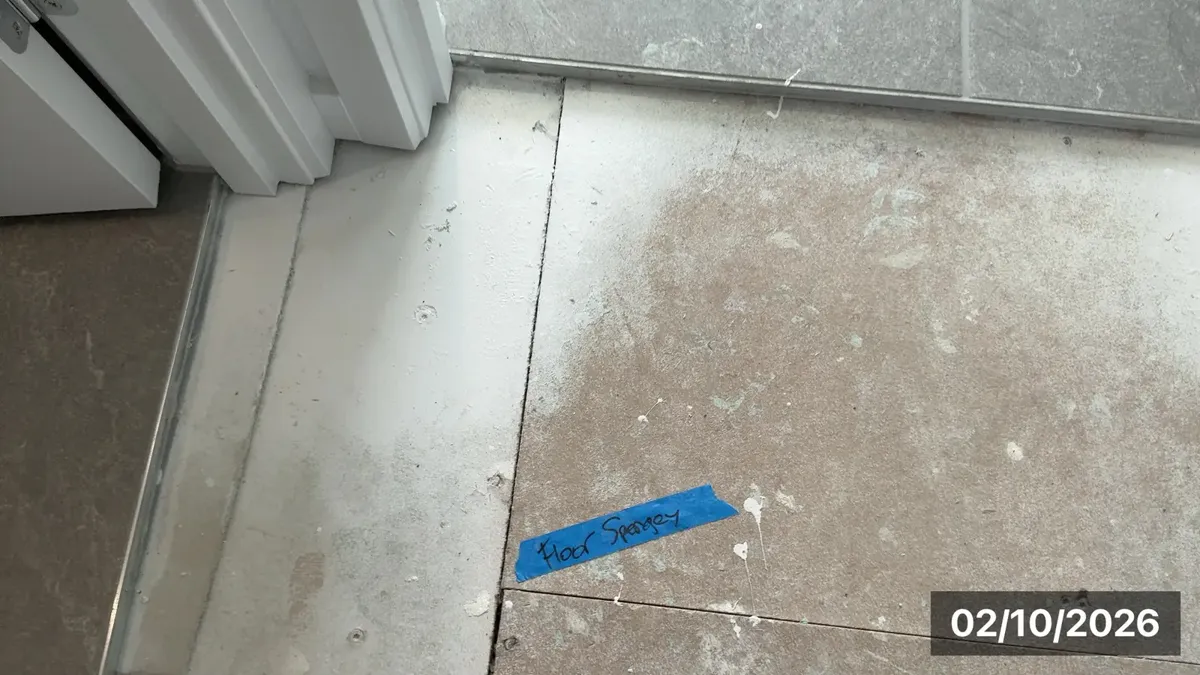
Particleboard (yellow-tongue) flooring that moves when you walk on it because it isn't glued or fixed properly.
Why it matters
Once carpet or tiles go down it means squeaks and cracked tiles, and the floor covering has to come up to fix it.
How we check it
We walk the upper floor before it's covered and listen and feel for movement.
The fix
Re-fix and glue the sheets to the joists.
How common it is
Flooring defects (squeaks, bounce, dips) turned up in 10% of homes at handover.
What this means for your home
A spongy or lifting particleboard floor means the sheet flooring has been wetted during construction or not fixed down properly, and it will never firm up on its own. AS 1860 sets how structural particleboard is laid and fixed, and a floor that moves underfoot points to swollen edges, missing fixings or a sheet that sat in the rain before the roof went on. At the frame or handover stage the affected sheets can be lifted and replaced while the floor is still accessible. Once carpet, tiles or timber go over the top, the same soft spot becomes a full floor-covering removal to reach. We walk every room feeling for movement, springiness and lifted joints, and mark the areas that move so they are made good before the final floor finish locks them in. The soft areas are marked and photographed on the report so the affected sheets are replaced before any floor covering goes down. A floor that moves underfoot will not settle — it only gets harder to reach once carpet, tile or timber is over it. Feeling for that movement in every room is the sort of thorough, room-by-room check that separates an independent inspection from a quick handover walk-through.
As seen on our socials