What it is
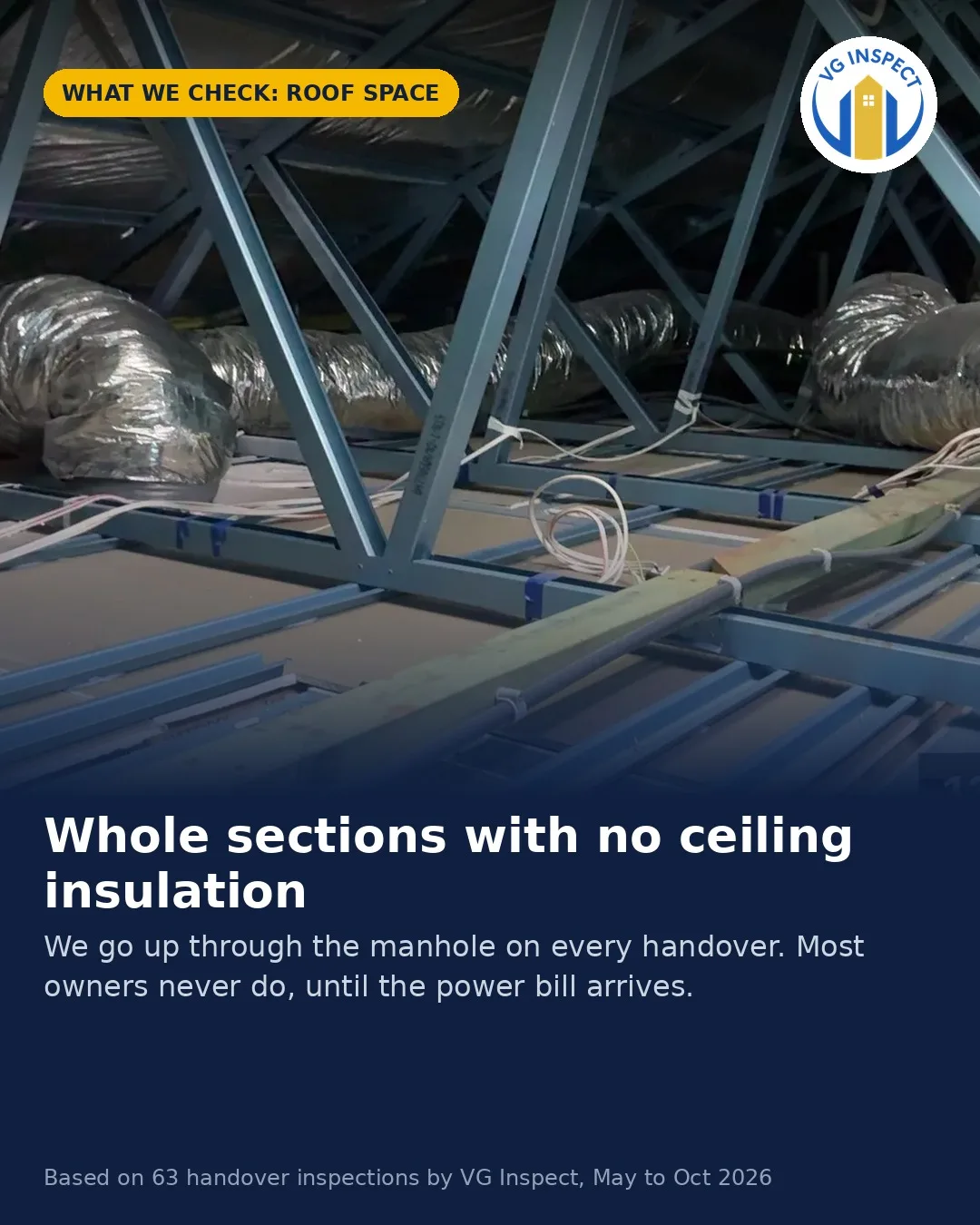
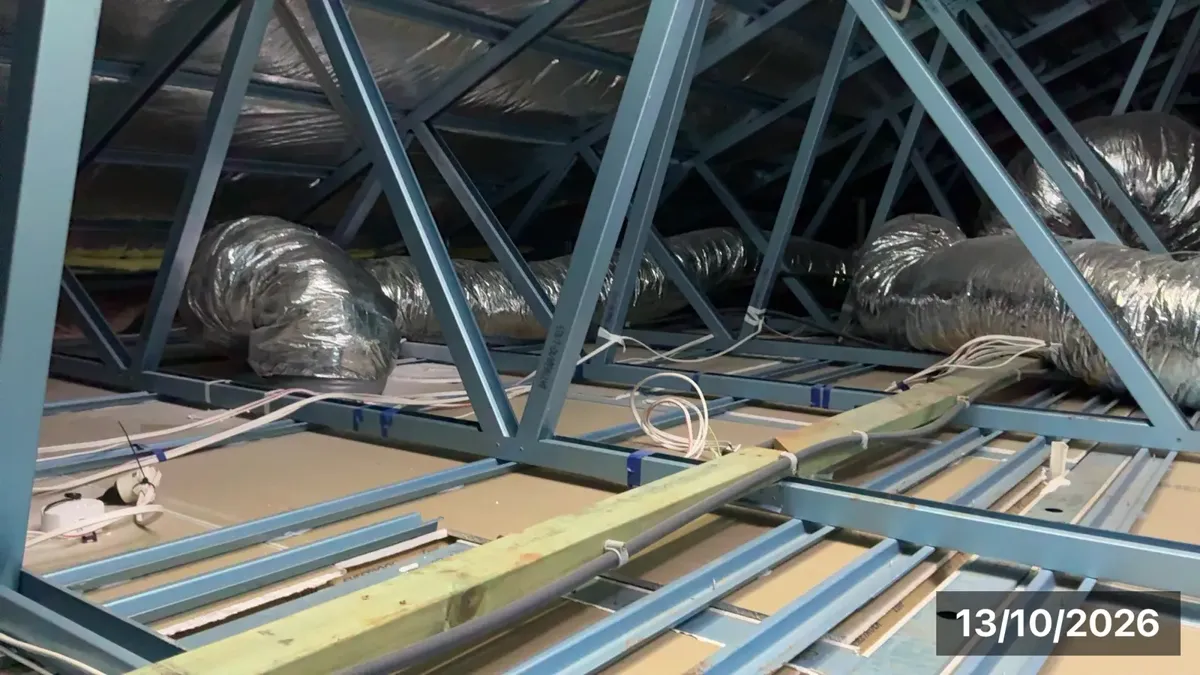
Large areas of the ceiling with no insulation batts.
Why it matters
A hotter house in summer and higher power bills. It's an energy-efficiency requirement nobody sees unless they go up the manhole.
How we check it
We check insulation covers the whole ceiling, ducting is connected, and there's no daylight or water staining.
The fix
Lay the missing batts to the specified R-value.
How common it is
We go up through the manhole on every handover inspection. In one recent home, whole sections had no ceiling batts at all.
What this means for your home
Missing or pushed-aside ceiling insulation is invisible from the room below, which is why it is so often left incomplete — a batt dragged out of the way for a downlight or an electrician's run and never put back. The NCC energy-efficiency provisions set the required R-value for your climate zone, and a bare patch over a bedroom means that room runs hot in a Queensland summer and your power bills carry it for the life of the house. The pre-plaster and handover stages are the practical windows to catch it: before the ceiling is sheeted, and again from the roof void at completion. We photograph gaps, compressed batts and areas left bare around penetrations so the builder reinstates them while access is still easy, not after you have lived through a January under a thin ceiling. We photograph the bare patches from the roof void and note the room below, so there is no argument about where the insulation is thin. Getting it reinstated now, while roof access is easy, is a world away from retrofitting a bedroom ceiling after you have moved in. It is one of those defects that costs you quietly, on every power bill, for as long as you own the house.
As seen on our socials