What it is
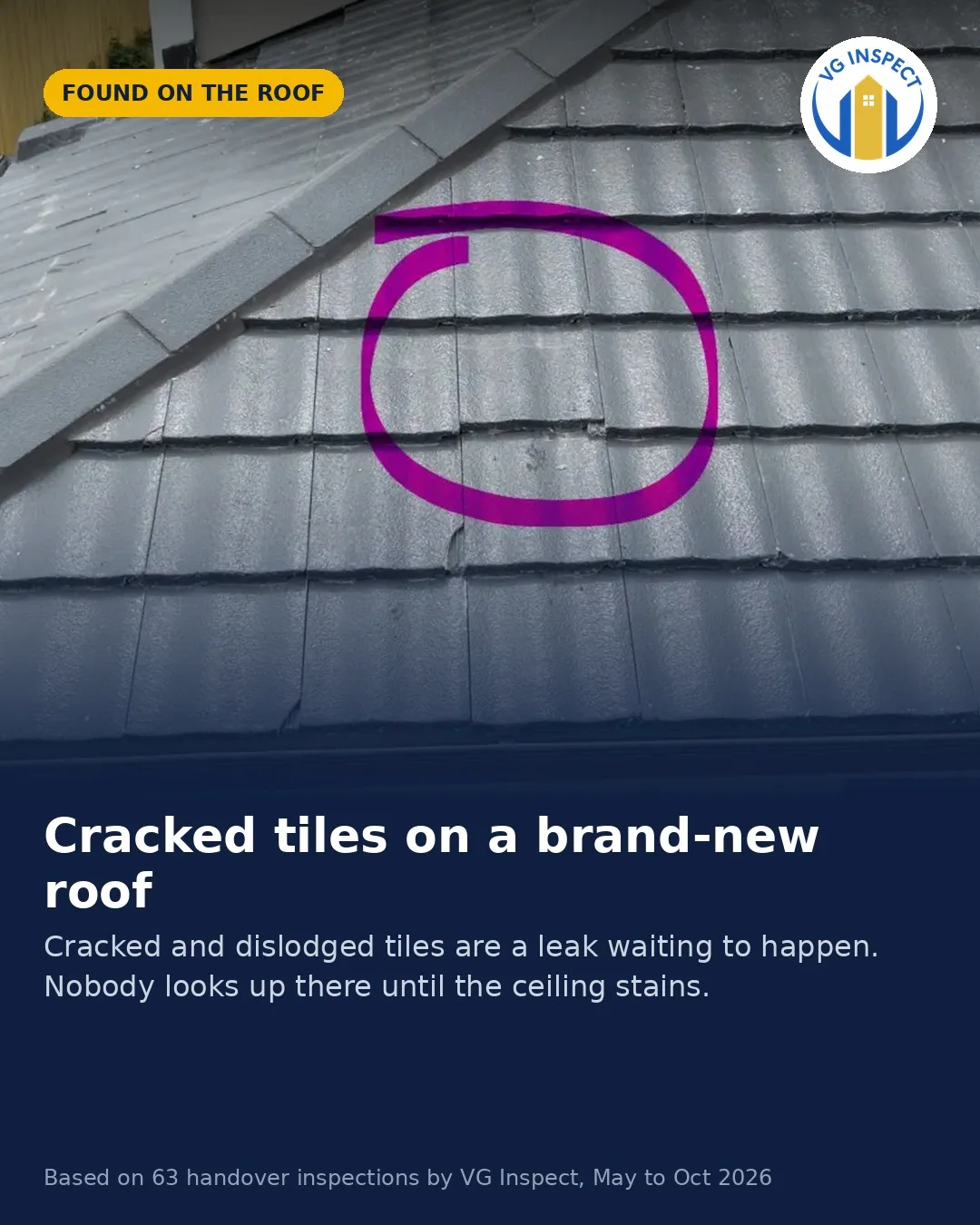
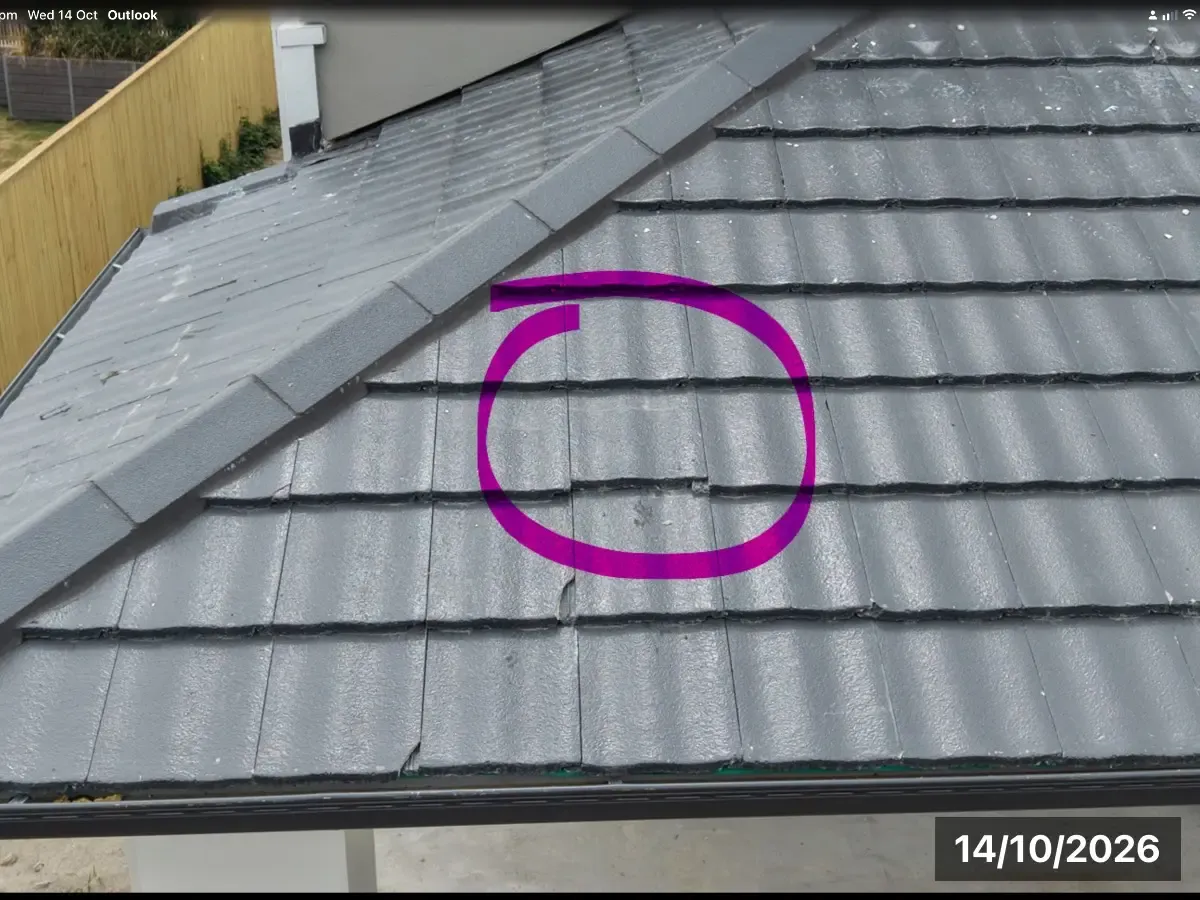
Concrete roof tiles cracked or sitting out of place on a brand-new roof.
Why it matters
A leak path into the roof space. Nobody checks the roof until the ceiling stains.
How we check it
We inspect the roof covering for cracked, chipped or dislodged tiles.
The fix
Replace and re-bed the damaged tiles.
How common it is
Roof sheets or tiles were dented or damaged in 14% of homes at handover.
What this means for your home
Cracked or chipped roof tiles are routine after a build — they get walked on by trades installing solar, aerials and flues — and a single cracked tile is a direct path for water into the roof void. The manufacturer's installation requirements and the NCC expect the roof covering to be sound and weatherproof. At handover a few replacement tiles are a quick job while the roofer is still coming back. Ignored, the crack lets water onto the sarking and battens, and in a tiled roof the damage spreads quietly until a ceiling stain gives it away months later. We scan the whole roof for cracked, slipped and chipped tiles, pay extra attention around anything that was installed last, and record each one so it is swapped out before the first storm finds it. Each cracked or slipped tile is photographed and located on the report so the roofer replaces them rather than guessing. Tiles get broken late in the build by the trades installing everything that sits on the roof, so a careful scan at handover almost always turns up a few. Swapping them now, before the first storm, is cheap insurance against water getting onto the sarking where you will not see it. We also check the ridge capping, valleys and the tiles immediately around solar brackets and flues, because those are where late trades do the most damage and where a single dislodged tile does the most harm.
As seen on our socials